Rajasthan
Classic North India with Mumbai & Kerala
NotIncluded
INR 161200 Per Person
3-4-5 stars
Travel Duration
18 Days / 17 Nights
Included in the trip




Individual departures
Round The Year
Embark on an extraordinary 18-day journey with My Tour Advisor that spans the sweeping heritage of North India, the dynamic cityscape of Mumbai, and the tranquil elegance of Kerala. This immersive itinerary is designed for travellers who want the full spectrum of India—from ancient forts and sacred ghats to coastal calm and urban energy.
Begin in Delhi, where the lanes of Old Delhi meet the grandeur of Lutyens’ planning; visit Jama Masjid, the alleys of Chandni Chowk, Raj Ghat, India Gate, Qutub Minar and more, under the expert guidance of My Tour Advisor. Travel on to Jaipur and Agra—the hill-fort and mirror halls of Amber, the royal courtyards of City Palace, and the iconic Taj Mahal at sunrise fulfil the romance of Indian royalty and Mughal grandeur. Then move south to Mumbai—India’s vibrant business hub—where colonial heritage meets modern skyline. Discover the Gateway of India, Elephanta Caves, Marine Drive, and the eclectic local life that makes Mumbai alive and unforgettable. Finally, you’ll relax and rejuvenate in Kerala, gliding through its famous backwaters, staying in house-boats, visiting tea-covered hills and spice plantations, and ending your journey by the tranquil Arabian Sea. Throughout, My Tour Advisor ensures seamless travel: private vehicles, hand-picked hotels, expert local guides, and rich cultural experiences beyond the ordinary. This tour isn’t just sightseeing—it is an expansive exploration of India’s heartbeat, from historic palaces and bustling cities to serene landscapes and coastal retreat.
Join My Tour Advisor and experience India in full colour—heritage-filled chapters of the north, the urban pulse of Mumbai, and the lush calm of Kerala. Every day brings new vistas, every region a new rhythm, and your journey becomes one of memory, discovery and delight.
Stages Of Tour
Day 1
ARRIVAL IN DELHI & SIGHTSEEING
Welcome to DELHI, The Capital of India. Your flight would land at Indira Gandhi International Airport. After landing kindly head towards the immigration department and get your passport stamped. Immigration Department would stamp the Visa on your Passport. After the Immigration and Custom check Kindly Take an Exit from the Airport from Exit Gate No 4.
My Tour Advisor’s Representative would be waiting you for your welcome outside the Gate No 4. After the Meet Proceed towards the visit of the capital of India.
Delhi, India’s captivating capital, is not just a city, it’s a journey through time. From the legendary Indraprastha of the Mahabharata to the grandeur of the Mughals and the elegance of British colonial rule, Delhi has been the stage where history was written. Here, ancient bazaars buzz with spices and silks, while majestic monuments whisper tales of empires long gone. Yet, beyond its history, Delhi is alive with vibrant traditions, mouthwatering street food, colourful festivals, and a cosmopolitan spirit. It is a city where every corner offers a discovery—whether it’s a rickshaw ride through the chaotic lanes of
Chandni Chowk or a stroll past Lutyens’ stately avenues. For travellers, Delhi is not just a destination, but the perfect gateway to experience the soul of India.
Full Day Dedicated to the exploration of the city. The day would start from the visit of Chandani chowk and Jama Masjid, one of the largest and most impressive mosques in India. Built by Mughal Emperor Shah Jahan in the 17th century, this architectural marvel features grand red sandstone courtyards, intricate marble inlay, and towering minarets that offer panoramic views of the city. The mosque’s serene atmosphere provides a striking contrast to the bustling streets outside. From here, dive into the vibrant chaos of Chandni Chowk, Delhi’s oldest and busiest market. Enjoy a ride on cycle rickshaw passing centuries-old shops, taste famous street food and explore treasures ranging from spices and textiles to silver jewellery. Explore the famous spice market Khari Baowli - Asia’s largest spice market.
Afterwards drive through the Lutyens Delhi. designed by British architect Sir Edwin Lutyens, is the heart of India’s capital. It features wide boulevards, grand gardens, and iconic landmarks like President house, India Gate, and Parliament House.
End your day with the visit of Humayun’s Tomb, a UNESCO World Heritage Site, it is a splendid example of Mughal architecture and the first garden tomb in India. Built in the 16th century by Empress Bega Begum for Emperor Humayun, its grand red sandstone structure with white marble domes later inspired the design of the Taj Mahal. Surrounded by Charbagh-style gardens, intricate arches, and Persian-influenced details, the monument reflects the glory of the Mughal era. After the visit return to the hotel. Overnight stay in Delhi.
Day 2
DELHI – JAIPUR (260 KM – 5 HOURS)
After breakfast. Start your drive towards JAIPUR, also called as the pink city. It will take you 5 to 6 Hours to reach Jaipur. On arrival you would be taken to your hotel for check-in.
In the afternoon Visit the Famous Shrine of Galta Ji. It is a religious shrine located at the outskirts of the city in the middle of the Hills. It was the meditating place for the Rishi Galav. The shrine has a religious Pond which is feed by natural spring water. Devotees come to GALTA ji to take a holy dip in the pond and pay homage to the Rishi Galav. Now the Temple is more famous for the Monkeys who have found this place a natural habitat, hence the place has Acquired the name as Monkey Temple.
Afterwards Proceed towards Birla Temple. Built in white marble, Birla Mandir is located in the centre of the city and dedicated to Lord VISHNU and Goddess Laxmi. It is one of the important hindu temple of the Jaipur. After the Visit Return to the Hotel for your overnight Stay.
Day 3
JAIPUR
Jaipur as a city came in to existence in the year 1727 when current Maharaja Jai Singh decided to build a new city to accommodate the rising population of the city. He envisioned a planned city, drawing on scientific and architectural principles of the time, making it one of India's first planned cities. The city's layout, based on Vastu Shastra and Shilpa Shastra, features a grid-iron plan with nine sectors. Jaipur's historical walled city was completed within four years, showcasing a blend of ancient and contemporary architectural styles.
After breakfast, drive towards Amber Fort with a photo stop at Hawa mahal (wind Palace). The fort is perched atop a hill. You can choose to reach up to the top of the hill on an elephant (on direct payment) or in jeep. The fort is famous for its stunning red sandstone and marble structures which includes various courtyards, buildings and pavilions. The most famous structures are Ganesh Pol – the Main entrance gate. The Sheesh Mahal (Mirror Palace) and royal chambers.
After the visit take a photo stop at Jal mahal – the lake Palace of Jaipur
After wards Visit the City Palace Jaipur, located in the heart of the Pink City, the complex includes courtyards, gardens, and several buildings. Its museum has a vast collection of royal costumes, artifacts, textiles & antique furniture.
Later proceed to visit the Jantar Mantar Observatory, it's one of the most well-preserved and largest astronomical observatories in the world. It includes sophisticated tools for the calculation of eclipses and for the detection of the position of stars, the calculation of ascendants. The principal attraction of the building is 27-meter-high sundial which is located in the center of the observatory.
After the visit explore the old city and its vibrant market. After the foundation of the city Jaipur attracted skilled artisans, craftsmen, and merchants from various parts of India to settle here. This led to a flourishing arts and crafts industry, with skilled craftsmen specializing in gem cutting, jewellery making, block printing, Textiles, and miniature paintings. Today Jaipur has become a paradise for shoppers.
later return to the hotel for dinner. Overnight stay in Jaipur.
Day 4
JAIPUR – ABHANERI - FATEHPUR SIKRI – AGRA (230 KM – 5 Hrs Approx)
After a sumptuous breakfast, Start your drive towards Agra, Along the way take a stop at Abhaneri Step Well - Also called as Chand Baori, It is one of the most remarkable stepwells in India and a fine example of ancient engineering and architecture. Built in the 9th century by King Chand of the Nikumbh dynasty, this massive structure was designed to conserve water in the arid desert climate. The stepwell descends about 20 meters and features over 3,500 narrow steps arranged in a symmetrical, crisscross pattern across 13 levels, creating a striking geometric design. Its clever construction ensured that the water remained cool, making it a vital source for drinking, irrigation, and community needs.
After the Visit Proceed towards Fatehpur Sikri, located about 40 kilometers west of Agra, It is a UNESCO World Heritage Site and one of the finest examples of Mughal architecture in India. Built in the late 16th century by Emperor Akbar the Great, it served as the capital of the Mughal Empire for a brief period from 1571 to 1585. Akbar constructed this magnificent city to honor the Sufi saint Sheikh Salim Chishti, who had blessed him with the prophecy of a male heir. The city is a blend of Islamic, Hindu, and Persian architectural styles, showcasing Akbar’s vision of a unified empire.
After the visit proceed towards Agra, On arrival in agra transfer to the Hotel for check-in. Overnight stay in Agra.
Day 5
AGRA SIGHTSEEING
Located in Uttar Pradesh, Agra is a city steeped in history, heritage, and architectural splendor. Best known as the home of the Taj Mahal, one of the Seven Wonders of the World, Agra draws millions of visitors from across the globe. Once the capital of the Mughal Empire, the city showcases stunning examples of Mughal architecture, including the majestic Agra Fort and Baby Taj. Beyond its monuments, Agra offers a rich cultural experience with bustling markets, traditional crafts like marble inlay work, and flavorful Mughlai cuisine. Agra is not just a destination—it is an unforgettable journey through time, beauty, and imperial legacy.
After Breakfast proceed towards the visit of Tajmahal- built by Emperor Shahjahan for his beloved wife Mumtaz Mahal. Taj Mahal is not just a monument—it's a timeless poem in white marble, a symbol of undying love etched into history. Skilled craftsmen from Persia, Turkey, France and Italy and some 20,000 laborers worked for 17 years to build this edifice. Marble was brought from Makrana near Jodhpur and precious stones of onyx, amethyst, malachite, lapis lazuli, turquoise, jade, crystal and mother of pearl were carried from Persia, Russia, Afghanistan, Tibet and China. It is, truly, love immortalized in stone. After the visit return to the hotel for breakfast
Later proceed towards the Agra Fort. It is a majestic red sandstone fortress located on the banks of the Yamuna River in Agra. Built primarily by Emperor Akbar in the 16th century and later expanded by his successors, the fort served as the main residence of the Mughal emperors. Enclosed within massive walls are a series of elegant palaces, audience halls, and mosques, including the Jahangiri Mahal, Diwan-i-Khas, and Moti Masjid. A fine example of Mughal architecture, blending Islamic and Hindu elements, Agra Fort offers a glimpse into royal life and India's rich historical legacy.
End your day with a visit to Mehtab Bagh, meaning “Moonlight Garden,” It is a Charbagh-style garden complex located across the Yamuna River, directly opposite the Taj Mahal. Built by Emperor Babur in the 16th century, it was later restored by Shah Jahan to serve as the perfect viewing point for the Taj. The beautifully aligned garden offers a serene atmosphere, with fountains, pavilions, and walkways designed to frame the monument’s reflection in the river. Best visited at sunset, Mehtab Bagh provides a breathtaking perspective of the Taj Mahal away from the crowds, making it a photographer’s paradise and a peaceful retreat.
After the visit return to the Hotel for Overnight Stay.
Day 6
AGRA – ORCHHA (260 Km | 3½ Hours)
Early Morning transfer to the train station to take the train for Jhansi. The journey would last for 3 ½ Hours. On arrival at Jhansi Station. Meet our representative in front of your coach, he will accompany you to the vehicle. Meet your Driver and drive to Orccha, once the famous feudal State Capital of Bundelkhand, here you will find a small village full of colours and beautiful temples with high Shikhara, called Chattris in the local language. It is a beautiful place on the banks of the river Betwa. On Arrival check-in to the Hotel.
Later visit the Fort Complex starting with Jahangir Mahal It is a stunning example of Indo-Islamic architecture, built in 1605 by Raja Bir Singh Deo to honor Emperor Jahangir’s visit. This three-storied palace is known for its symmetrical design, ornate balconies, arched doorways, and massive domes. Its grand entrance, adorned with carved elephants, leads to a spacious courtyard surrounded by intricately designed chambers. The palace reflects a perfect blend of Mughal aesthetics and Rajput military architecture. Built for ceremonial purposes rather than residence, it offers sweeping views of the Betwa River and surrounding landscape. Jahangir Mahal remains one of Orchha’s most iconic and majestic landmarks.
Later visit Raja Mahal, located within the Orchha Fort complex, was built by Raja Madhukar Shah in the 16th century as the royal residence of the Bundela kings. From the outside, it appears simple and austere, but the interiors are richly decorated with exquisite murals and frescoes depicting scenes from the Ramayana, Mahabharata, and local legends. The palace features grand halls, jharokhas (balconies), and intricately painted ceilings, showcasing traditional Bundela art. Unlike Jahangir Mahal, Raja Mahal was a functional living space, emphasizing comfort and devotion. Its spiritual ambiance and artistic detailing make it a captivating site for history and culture lovers.
After the visit of fort complex proceed towards the visit of Royal Cenotaphs, known as Chhatris, they are a group of 15 stunning memorials built to honor the Bundela kings and their families. Located along the serene banks of the Betwa River, these structures date back to the 16th to 18th centuries. Designed in classic Rajput architecture, each cenotaph features ornate domes, arched doorways, and towering pavilions. The most notable one commemorates Raja Bir Singh Deo. Though not actual tombs, they symbolize royal cremation sites and pay homage to the legacy of Orchha’s rulers. The site offers a peaceful atmosphere and picturesque views, especially during sunrise and sunset.
After the visit take a stroll in the market or visit other temples like Chaturbhuj Temple or Raja Ram Temple. Overnight Stay in Orchha.
Day 7
ORCHAA – KHAJURAHO (200 KM | 4 Hours)
After the Breakfast, Start your Journey towards KHAJURAHO. On arrival Checkin to the Hotel. In the afternoon visit of the the Khajuraho Temples. famous for their intricate carvings and erotic sculptures. Built between the 10th and 12th centuries by the Chandela dynasty, these temples reflect a unique blend of spirituality, art, and sensuality. Out of the original 85, only 22 temples have survived, showcasing exceptional craftsmanship and architectural brilliance. The temples are divided into Western, Eastern, groups, with the Kandariya Mahadev Temple being the most impressive. A UNESCO World Heritage Site, Khajuraho attracts history lovers, art enthusiasts, and spiritual seekers from around the world.
After the Visit Transfer to the Hotel for an Overnight Stay.
Day 8
KHAJURAHO – PRAYAGRAJ - VARANASI (400 KM | 8 Hours)
After the Breakfast start your journey - towards VARANASI, on the way stop at PRAYAGRAJ.
Start your day Early and reach to PRAYGARAJ in The Afternoon.
Prayagraj, formerly known as Allahabad, is a historic and sacred city in Uttar Pradesh, India, situated at the confluence of the Ganga, Yamuna, and the mythical Saraswati rivers, known as the Triveni Sangam. It is one of Hinduism’s holiest cities and the site of the Kumbh Mela, the world’s largest religious gathering. On Arrival visit of the SANGAM. Afterwards Transfer to Varanasi. Arrival at Varanasi and check-in to the Hotel. Overnight Stay in Varanasi.
Day 9
VARANASI SIGHTSEEING.
Varanasi, also known as Kashi or Banaras, is one of the oldest continuously inhabited cities in the world and a major spiritual hub in India. Located on the banks of the Ganga River in Uttar Pradesh, it is considered the spiritual capital of India. The city is sacred to Hindus, Buddhists, and Jains, and is famous for its ghats, ancient temples, and ceremonial aartis. People come here to seek moksha (liberation), perform last rites, or simply experience its timeless mysticism. With its rich blend of faith, culture, music, and learning, Varanasi leaves a lasting impact on every visitor.
In the morning wake up before dawn and head out towards the ghats of Varanasi to enjoy a Morning Boat Ride at the Ganges. It’s a spiritually moving experience. As the first light of dawn touches the waters of the Ganga, the ghats come alive with a unique blend of devotion, ritual, and everyday life. From the boat, you witness priests performing aarti, devotees taking holy dips, yogis meditating, and locals beginning their day. The calm of the river, the golden sunlight, and the chants echoing from the ghats create a magical, almost timeless atmosphere. Later take a walk into the Narrow Alleys of the old City witnessing the awakening of the city. After the visit return to the Hotel for Breakfast.
In the afternoon head out to visit the Buddhist complex of Sarnath. Take your Lunch at a local traditional Indian restaurant. Afterwards visit the Sarnath Buddhist complex. It is one of Buddhism’s most sacred sites. It is where Lord Buddha gave his first sermon after attaining enlightenment, known as the Dharmachakra Parivartan (Turning of the Wheel of Dharma). The site features important monuments like the Dhamek Stupa, Chau Khandi Stupa, and the Ashokan Pillar with its lion capital, India’s national emblem. Sarnath also houses a rich archaeological museum showcasing ancient artifacts and sculptures. Peaceful and spiritually significant, Sarnath attracts pilgrims and history enthusiasts from around the world, offering a deep insight into the early teachings and spread of Buddhism.
Later visit a Silk work factory. Varanasi has been famous for silk brocade work famous for Brocade work offering you a possibility of buying some fine silk items.
In the afternoon head out towards Namo ghat to catch the boat to attend the ceremonial evening Aarti (Prayer) to Mother Ganges. Ganga Aarti is a captivating spiritual ritual held every evening at Dashashwamedh Ghat. As dusk falls, priests dressed in traditional attire perform the aarti with large brass lamps, synchronized chants, conch sounds, and incense, all offered to Mother Ganga. The atmosphere
becomes divine, with glowing lamps, rhythmic mantras, and the river reflecting the golden light. Devotees and tourists gather on the Ghats and in boats to witness this mesmerizing ceremony. it symbolizes gratitude to the sacred river and invokes divine blessings. The Ganga Aarti is not just a ritual—it’s a
soulful experience that touches every heart. After attending the Prayer return to the hotel. Overnight Stay in Varanasi.
Day 10
VARANASI - MUMBAI (FLIGHT | 1.5 Hours)
Mumbai, formerly known as Bombay, has a rich and layered history that mirrors India’s transformation over centuries. Once a cluster of seven islands inhabited by the Koli fishing community, it came under Portuguese control in the 16th century and was later handed over to the British as part of the dowry of Catherine of Braganza in 1661. The British East India Company recognized its strategic value and developed it into a major trading and maritime hub. With the opening of the Suez Canal in 1869, Mumbai became the gateway of India’s trade with the world. The city flourished as an industrial and cultural center, attracting migrants from across the country. Its colonial architecture, like the Gateway of India and Chhatrapati Shivaji Terminus, stands as a reminder of its past grandeur. Today, Mumbai remains a bustling metropolis—where history, ambition, and diversity coexist in a uniquely dynamic rhythm.
Morning at Leisure. In time transfer to Varanasi airport to catch the flight for Mumbai. On Arrival at Mumbai Airport meet with our Representative and Transfer to Hotel for check -in.
In the afternoon start the visit of the city with its important monuments stating with Mani Bhawan, It is a historic building located, closely associated with Mahatma Gandhi's life and the Indian freedom struggle. From 1917 to 1934, it served as Gandhi’s residence during his visits to the city. It was here that he initiated major movements like non-cooperation, Satyagraha, and Swadeshi. Now converted into a museum and research center, Mani Bhawan houses a library, photo galleries, personal belongings, and a replica of Gandhi's room. The building offers deep insight into Gandhi’s life, philosophy, and leadership in India's independence movement. It remains a place of inspiration for visitors from around the world.
Later visit Chhatrapati Shivaji Maharaj Terminus (formerly Victoria Terminus) is a historic railway station located in Mumbai, India, and is one of the city's most iconic landmarks. Built in 1887 to commemorate Queen Victoria’s Golden Jubilee, it was designed by British architect Frederick William Stevens in a striking blend of Victorian Gothic Revival and traditional Indian architecture. The station features a grand central dome, pointed arches, turrets, and intricately carved stonework, making it a masterpiece of 19th-century railway architecture. Declared a UNESCO World Heritage Site in 2004,. Its architectural beauty and cultural significance make it a must-visit attraction in Mumbai.
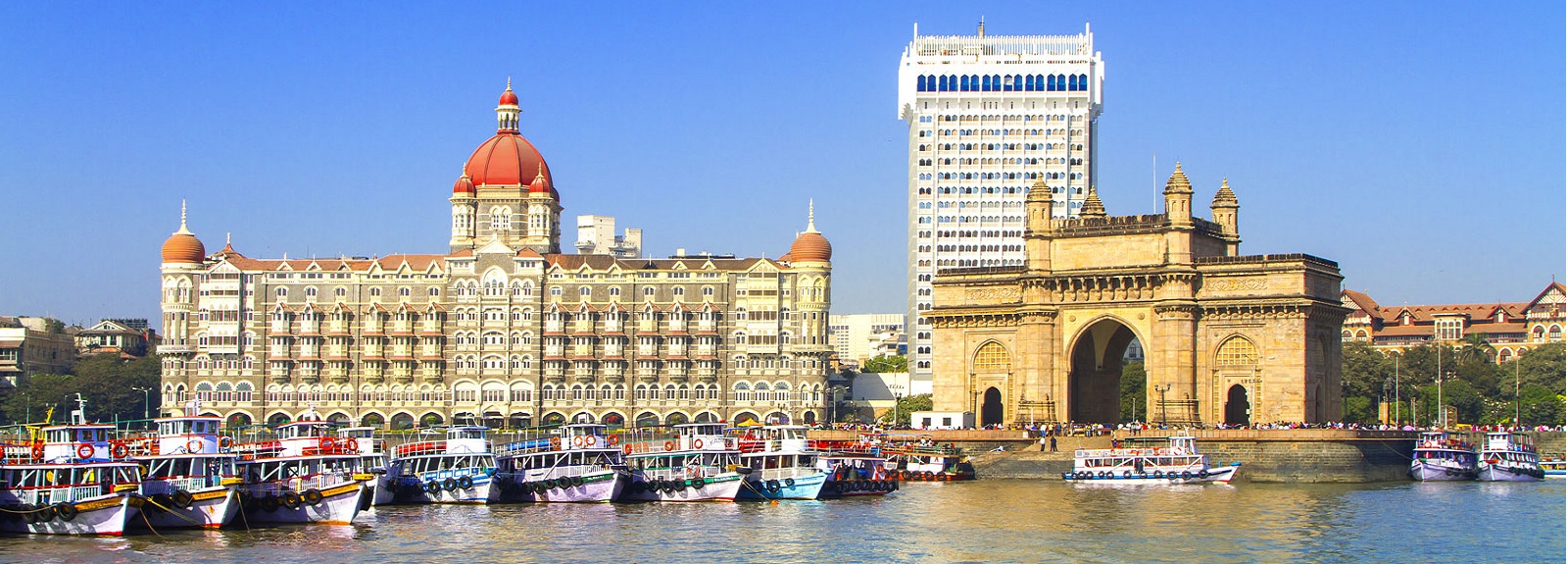
Afterwards Proceed to Gateway of India - It is a grand arch, built in 1924 to commemorate the visit of King George V and Queen Mary to India. Overlooking the Arabian Sea, it combines Indo-Saracenic and Islamic architectural styles. It became a symbolic entry point during British rule and also witnessed the departure of the last British troops in 1948. Today, it is a popular tourist attraction and historic landmark.
After the visit return to the Hotel. Overnight in Mumbai.
Day 11
MUMBAI | ELEPHANTA CAVES
After Breakfast checkout from hotel. Today you will be visiting the Elephanta Island famous for its caves. Take a Boat Trip of 1 Hour to Elephanta Caves. The Elephanta Caves are a UNESCO World Heritage Site located on Elephanta Island, about 11 kilometers northeast of Mumbai, Maharashtra. These ancient rock-cut caves date back to the 5th to 8th centuries and are primarily dedicated to Lord Shiva. The main attraction is the Great Cave (Cave 1), which houses magnificent sculpted panels depicting various aspects of Shiva, including the famous Trimurti – a colossal 20-foot-high, three-headed bust symbolizing his roles as creator, preserver, and destroyer. The caves are a fine example of Indian rock-cut architecture, blending art, spirituality, and craftsmanship. The island also contains a few Buddhist caves, though they are less elaborate. The name “Elephanta” was given by Portuguese colonizers who found a large stone elephant near the island's shore (now relocated to Mumbai’s Victoria Gardens). Accessible by ferry from the Gateway of India, Elephanta offers not just historical insights but also scenic views, making it a popular day-trip destination.
Later return to the city and Visit Dhobi Ghat - It is the world’s largest open-air laundry, located near Mahalaxmi railway station. Established in 1890, it is where hundreds of traditional washermen, known as dhobis, wash clothes in long rows of open concrete wash pens, each fitted with a flogging stone. Clothes from hotels, hospitals, and households across the city are brought here for cleaning. Despite its chaotic appearance, the system is highly organized and efficient. Dhobi Ghat has become a popular tourist attraction for its unique and colorful view of Mumbai’s working-class life and has even been featured in films and documentaries.
After the visit proceed towards the Hotel for overnight Stay.
Day 12
MUMBAI – COCHIN (Flight -1.5 Hours)
Kochi, often called the Queen of the Arabian Sea, is a charming coastal city in Kerala that beautifully blends colonial heritage, maritime history, and vibrant local culture. Once a major spice trading port, Kochi attracted traders from Arabia, China, Portugal, and Britain — influences still visible in its architecture, cuisine, and traditions. The city’s historic Fort Kochi area, with its narrow lanes, Chinese fishing nets, and colonial-era buildings, exudes an old-world charm. Landmarks like the St. Francis Church, Dutch Palace, and Jewish Synagogue tell stories of a multicultural past, while the lively Marine Drive and art-filled Mattancherry showcase Kochi’s modern spirit. With serene backwaters, colorful festivals, and mouthwatering seafood, Kochi serves as a perfect gateway to Kerala’s beauty and warmth. A harmonious blend of history, art, and coastal serenity, Kochi offers travelers a relaxed yet enriching experience at the crossroads of cultures.
After the Breakfast transfer to Airport to catch the flight for Cochin. On Arrival meet with our representative. My Tour Advisor’s Representative would be waiting for you to welcome you outside the Exit Gate. After the Meet Start the city Tour.
After meeting with our Representative start your city, First you will be visiting Mattancherry Palace - also known as the Dutch Palace, It is one of Kochi’s most treasured heritage sites, reflecting a blend of Portuguese, Dutch, and traditional Kerala architecture. Originally built by the Portuguese in 1555 and later renovated by the Dutch, the palace was a gift to the Raja of Cochin. Its modest exterior contrasts beautifully with the richly decorated interiors, featuring exquisite murals depicting scenes from the Ramayana and Mahabharata, royal portraits, and period artifacts. The central courtyard houses a revered temple dedicated to the royal deity, Pazhayannur Bhagavathi. A visit to Mattancherry Palace offers a fascinating glimpse into Kerala’s royal history and artistic grandeur.
After the palace visit proceed towards Jews Synagogue - Also called as the Paradesi Synagogue, located in Jew Town, Mattancherry, Kochi, is the oldest active synagogue in the Commonwealth, built in 1568 by the Paradesi Jews (Sephardic Jews of Spanish and Portuguese descent). It features stunning interiors, including hand-painted Chinese porcelain tiles, Belgian glass chandeliers, and a gold pulpit. The synagogue also houses rare scrolls of the Torah and ancient copper plates recording the privileges granted to the Jewish community by local rulers. Still functioning as a place of worship, it stands as a beautiful symbol of Kochi’s multicultural past and the once-thriving Jewish presence in Kerala.
Later visit St. Francis Church, It is one of the oldest European churches in India, originally built in 1503 by Portuguese Franciscan friars. It holds great historical importance as it once housed the tomb of Vasco da Gama, the famous Portuguese explorer, before his remains were moved to Lisbon. The church’s simple yet elegant design reflects early Portuguese architecture, with wooden ceilings, colonial-era tombstones, and serene interiors. Today, it stands as a symbol of Kerala’s colonial heritage and religious harmony, attracting history lovers and pilgrims alike.
End your day with a visit of Chinese Fishing Nets - chinese fishing nets in Fort Kochi are iconic shore-operated lift nets believed to have been introduced by Chinese traders in the 14th century. These massive wooden structures are fixed to the land and operated by a unique counterweight system. Stretching out into the sea, they create a striking silhouette, especially at sunset. Still in use today, they offer a glimpse into Kochi’s rich maritime history and traditional fishing practices.
After the visit you proceed towards to your Hotels for check-in. Overnight Stay in COCHIN.
Day 13
COCHIN – MUNNAR (145 KM – 4 Hrs Approx)
Munnar, located in the Western Ghats of Kerala, is one of South India's most popular and picturesque hill stations. Nestled at an altitude of around 1,600 meters, it is renowned for its sprawling tea plantations, mist-covered hills, and cool climate. Once a summer retreat for British officials during colonial times, Munnar is now a haven for nature lovers, honeymooners, and adventure seekers. The town is surrounded by lush green valleys, waterfalls, winding roads, and wildlife sanctuaries. Key attractions include Eravikulam National Park, home to the endangered Nilgiri Tahr, the Tea Museum, Mattupetty Dam, and Anamudi Peak, The highest in South India. Munnar also offers opportunities for trekking, boating, and visiting spice gardens. The scenic beauty, fresh mountain air, and peaceful ambiance make it an ideal getaway from city life. Munnar’s charm lies in its blend of natural splendor, colonial history, and vibrant local culture.
After breakfast. Start your drive towards munnar. On Arrival check-in to the Hotel. In the Afternoon Relax in your Hotel. In the evening you can take a stroll in the town or go hiking in the mountains.
Overnight in Munnar
Day 14
MUNNAR
After Breakfast head out to visit Eravikulam National Park, located just 13 km from Munnar, is one of Kerala’s most scenic and well-preserved wildlife sanctuaries. Spread across rolling hills of the Western Ghats, it is home to the endangered Nilgiri Tahr and over 130 species of birds and butterflies. The park’s mist-covered landscapes, lush valleys, and panoramic viewpoints offer breathtaking views of Anamudi Peak, South India’s highest point. Visitors can enjoy a guided eco-bus ride followed by a light trek to explore its pristine beauty. During the blooming season, the hills turn blue with the rare Neelakurinji flowers, which blossom once every twelve years.
Afterwards you can proceed towards Mattupetty Dam, located about 13 km from Munnar, is a beautiful hill-country reservoir surrounded by rolling tea gardens and lush green hills. Built in the 1950s for hydroelectric power generation, the dam has now become one of Munnar’s most popular attractions. The serene lake formed by the dam offers opportunities for boating, photography, and picnics amidst stunning natural scenery. The calm waters often reflect the surrounding forests and misty peaks, creating postcard-perfect views. The area is also known for sightings of elephants and native birds, making it a delightful stop for both nature lovers and photographers exploring the Munnar region.
Later visit a Tea Production Factory, which will offer you a glimpse into the region’s century-old tea-making tradition. These factories showcase the complete process — from plucking tender tea leaves to drying, rolling, and packaging. Visitors can walk through aromatic processing rooms, observe workers at different stages, and learn about the fine art of tea grading. It’s an immersive experience that blends history, culture, and the soothing charm of Kerala’s lush tea-covered hills.
Later Return to the hotel. Overnight in Munnar.
Day 15
MUNNAR – THEKKADY (100 Km | 2 Hours)
After Breakfast head out to visit Eravikulam National Park, located just 13 km from Munnar, is one of Kerala’s most scenic and well-preserved wildlife sanctuaries. Spread across rolling hills of the Western Ghats, it is home to the endangered Nilgiri Tahr and over 130 species of birds and butterflies. The park’s mist-covered landscapes, lush valleys, and panoramic viewpoints offer breathtaking views of Anamudi Peak, South India’s highest point. Visitors can enjoy a guided eco-bus ride followed by a light trek to explore its pristine beauty. During the blooming season, the hills turn blue with the rare Neelakurinji flowers, which blossom once every twelve years.
Afterwards you can proceed towards Mattupetty Dam, located about 13 km from Munnar, is a beautiful hill-country reservoir surrounded by rolling tea gardens and lush green hills. Built in the 1950s for hydroelectric power generation, the dam has now become one of Munnar’s most popular attractions. The serene lake formed by the dam offers opportunities for boating, photography, and picnics amidst stunning natural scenery. The calm waters often reflect the surrounding forests and misty peaks, creating postcard-perfect views. The area is also known for sightings of elephants and native birds, making it a delightful stop for both nature lovers and photographers exploring the Munnar region.
Later visit a Tea Production Factory, which will offer you a glimpse into the region’s century-old tea-making tradition. These factories showcase the complete process — from plucking tender tea leaves to drying, rolling, and packaging. Visitors can walk through aromatic processing rooms, observe workers at different stages, and learn about the fine art of tea grading. It’s an immersive experience that blends history, culture, and the soothing charm of Kerala’s lush tea-covered hills.
Later Return to the hotel. Overnight in Munnar.
Day 16
THEKKADY – ALLEPPEY - KUMARKOM (170 Km | 4 Hours)
Vembanad Lake Alleppey, stretching across the districts of Alappuzha, Kottayam, and Ernakulam, is the largest lake in Kerala and one of India’s longest. This vast expanse of shimmering backwaters forms the heart of Kerala’s unique ecosystem and is the lifeline of its famous houseboat tourism. Fringed by lush coconut groves, paddy fields, and tranquil villages, the lake offers an idyllic setting for cruising on traditional Kettuvallams. It’s also home to migratory birds and the renowned Nehru Trophy Boat Race, held annually at Punnamada Lake. A visit to Vembanad is a peaceful escape into Kerala’s natural beauty, rural charm, and timeless backwater culture.
After Breakfast transfer to Alappuzha to board a houseboat cruise on Vembanad Lake. It is one of Kerala’s most enchanting experiences — a serene journey through tranquil backwaters framed by coconut palms and lush paddy fields. As your traditional Kettuvallam houseboat glides across India’s largest freshwater lake, you can relax on deck, watching village life unfold along the banks — fishermen at work, women washing clothes, and children waving from canoes. The gentle rhythm of the waters, the cool breeze, and the flavours of authentic Kerala cuisine served on board create a truly immersive escape. Sunset over Vembanad paints the sky in gold and crimson, offering a picture-perfect end to a magical day on the backwaters.
After the excursion, Transfer to the Hotel at Kumakom for check-in. Overnight stay in Kumarkom
Day 17
KUMARKOM
Vembanad Lake Alleppey, stretching across the districts of Alappuzha, Kottayam, and Ernakulam, is the largest lake in Kerala and one of India’s longest. This vast expanse of shimmering backwaters forms the heart of Kerala’s unique ecosystem and is the lifeline of its famous houseboat tourism. Fringed by lush coconut groves, paddy fields, and tranquil villages, the lake offers an idyllic setting for cruising on traditional Kettuvallams. It’s also home to migratory birds and the renowned Nehru Trophy Boat Race, held annually at Punnamada Lake. A visit to Vembanad is a peaceful escape into Kerala’s natural beauty, rural charm, and timeless backwater culture.
After Breakfast transfer to Alappuzha to board a houseboat cruise on Vembanad Lake. It is one of Kerala’s most enchanting experiences — a serene journey through tranquil backwaters framed by coconut palms and lush paddy fields. As your traditional Kettuvallam houseboat glides across India’s largest freshwater lake, you can relax on deck, watching village life unfold along the banks — fishermen at work, women washing clothes, and children waving from canoes. The gentle rhythm of the waters, the cool breeze, and the flavours of authentic Kerala cuisine served on board create a truly immersive escape. Sunset over Vembanad paints the sky in gold and crimson, offering a picture-perfect end to a magical day on the backwaters.
After the excursion, Transfer to the Hotel at Kumakom for check-in. Overnight stay in Kumarkom
Day 18
KUMARKOM – DEPARTURE
Morning at leisure. In the Afternoon Transfer to Kochin Airport to catch the flight for your onward Destination.
END OF THE SERVICES
The hotels
My Tour Advisor Provides a wide variety of hotels
Cost Per Person For Different Categories
| # | No of Pax | Standard | Superior | Prestige |
|---|---|---|---|---|
| 1 | 2 Pax | INR 161000 | INR 193800 | INR 265000 |
| 2 | 4 Pax | INR 145000 | INR 174400 | INR 213600 |
| 3 | 6 Pax | INR 137000 | INR 164700 | INR 201000 |
| 4 | 8 Pax | INR 128900 | INR 155000 | INR 189900 |
| 5 | 10 Pax | INR 120900 | INR 145300 | INR 178000 |
Supplements
| # | Plan | Standard | Superior | Prestige |
|---|---|---|---|---|
| 1 | Single Supplement | INR 96700 | INR 116300 | INR 142400 |
| 2 | Half Board | INR 6800 | INR 12600 | INR 20400 |
| 3 | Full Board | INR 13600 | INR 25200 | INR 40800 |
| 4 | Christmas Supplement | INR 40300 | INR 48400 | INR 59300 |
| # | Months | Dates 1 | Dates 2 |
|---|
Inclusions
- Accommodation as per Itinerary on twin sharing with Bed and Breakfast Plan.
- All Transport & Sightseeing by private Air-Conditioned vehicle as per program.
- Professional English Speaking Guide for Sightseeing.
- Monument Entrance fees.
- Domestic flight from Varanasi to Mumbai in Economy class (Check-in baggage – 15 Kg)
- Domestic flight from Mumbai to Cochin in Economy class (Check-in baggage – 15 Kg)
- Train from Agra to Jhansi in AC Chair Car.
- Rickshaw Ride in Old Delhi
- Visit of Abhaneri Step well - An 8th Century Architectural Marvel
- Day Excursion in Houseboat with Lunch
- Mountain Jeep Safari in Periyar
- 2 bottles of water per traveler per day
- Travel kit document bag
- One souvenir gift from MY TOUR ADVISOR
- Private and personalized services.
- All taxes, fees and handling charges
- GST (Goods and Services Tax)
Exclusions
- International Flights.
- Visa and Insurances
- Food and drinks, unless specified.
- Gratuities (recommended).
- Anything not mentioned and specified in Itinerary.
TOUR HIGHLIGHTS
In accordance to the COVID 19 pandemic all our tours are operated with all precautionary measures including SANITIZED CARS/COMPLIMENTARY SANITIZERS/MASKS (Your safety is our priority)
- A unique tour showing the great dynasties of North India and rich heritage of South India
- Tajmahal at Agra and Amer Fort at Jaipur
- Erotic sculptures of at Khajuraho and never ending spirituality of Varanasi
- Tea plantation and spice plantation at Munnar and Thekkady
- Stay inside a Houseboat
- Incredible flavours of India
- A romantic ride in Backwaters of Kerala
Enquiry Form
Please fill the below form for more information
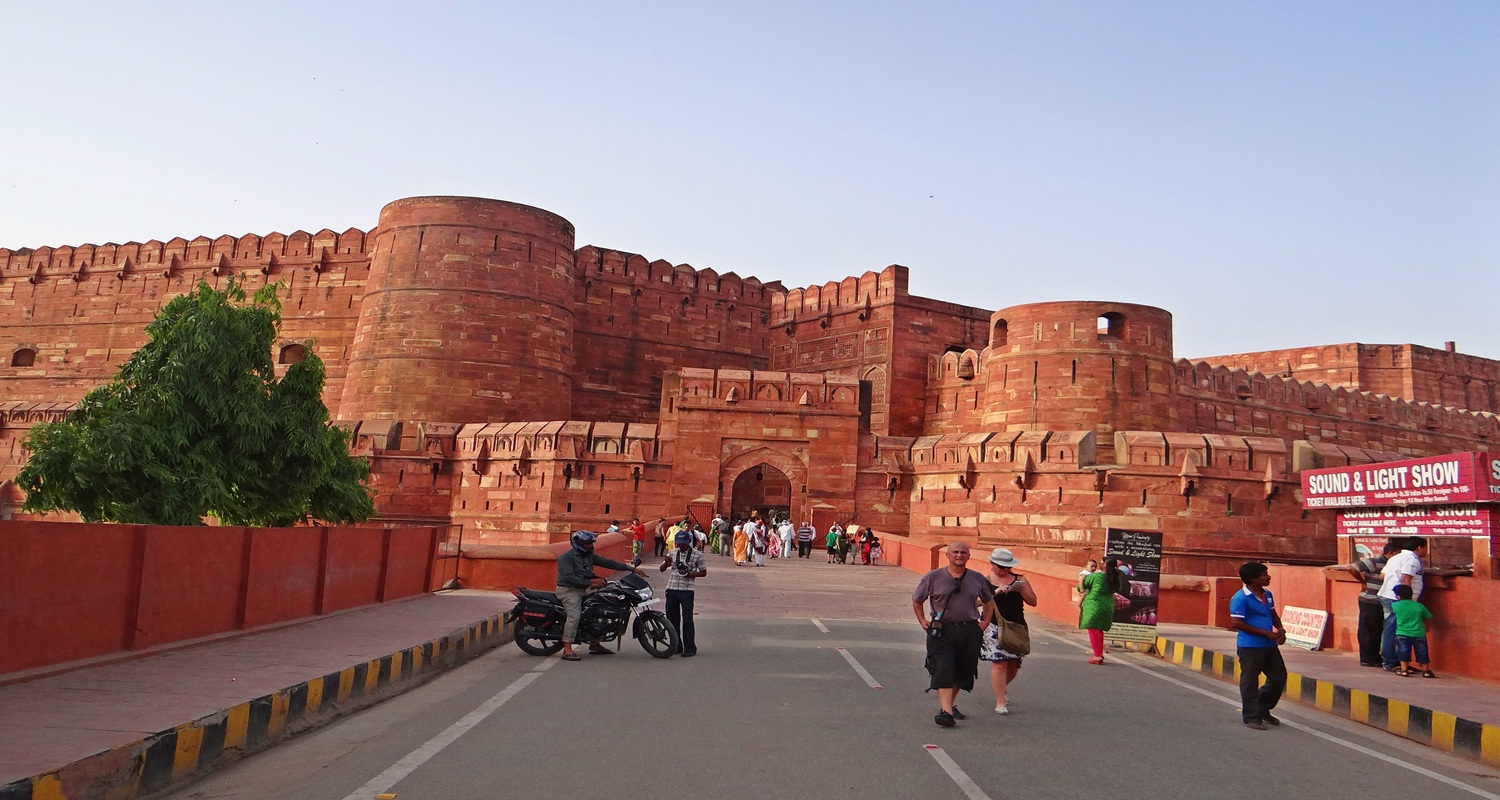
The Red Fort of Agra
The Red Fort of Agra, also known as the Agra Fort, is a UNESCO World Heritage Site located in Agra, India. It was built primarily by the Mughal Emperor Akbar in 1565, and later enhanced by his grandson Shah Jahan, who added several white marble structures.
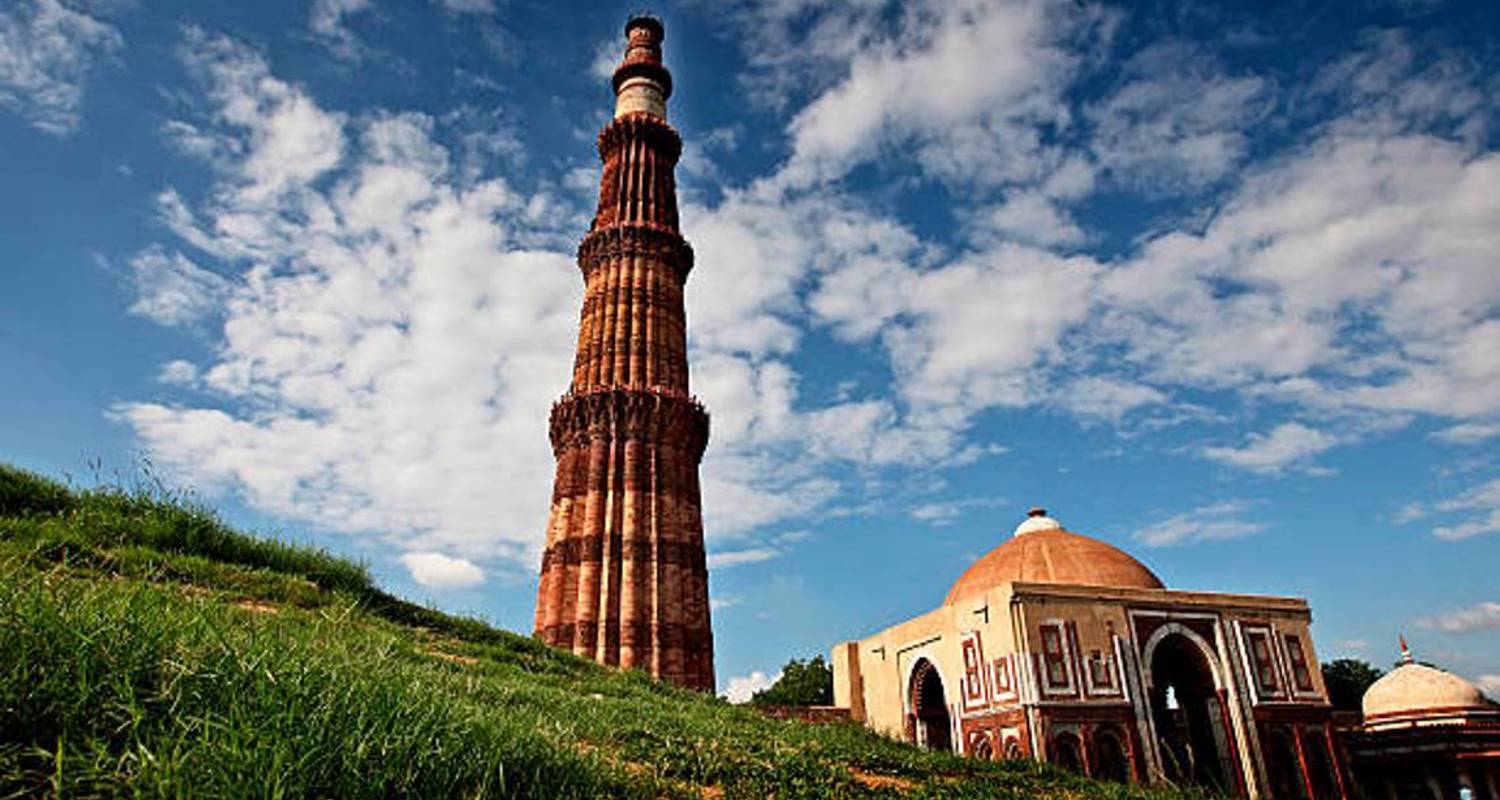
The Qutub Minar, Delhi
The Qutub Minar, located in Delhi, is the tallest brick minaret in the world, standing at 73 meters. A UNESCO World Heritage Site, it was commissioned in 1193 by Qutb-ud-din Aibak, the founder of the Delhi Sultanate, and later completed by his successors. Built in red sandstone and marble, the tower is adorned with intricate carvings and verses from the Qur’an, showcasing Indo-Islamic architecture at its finest.
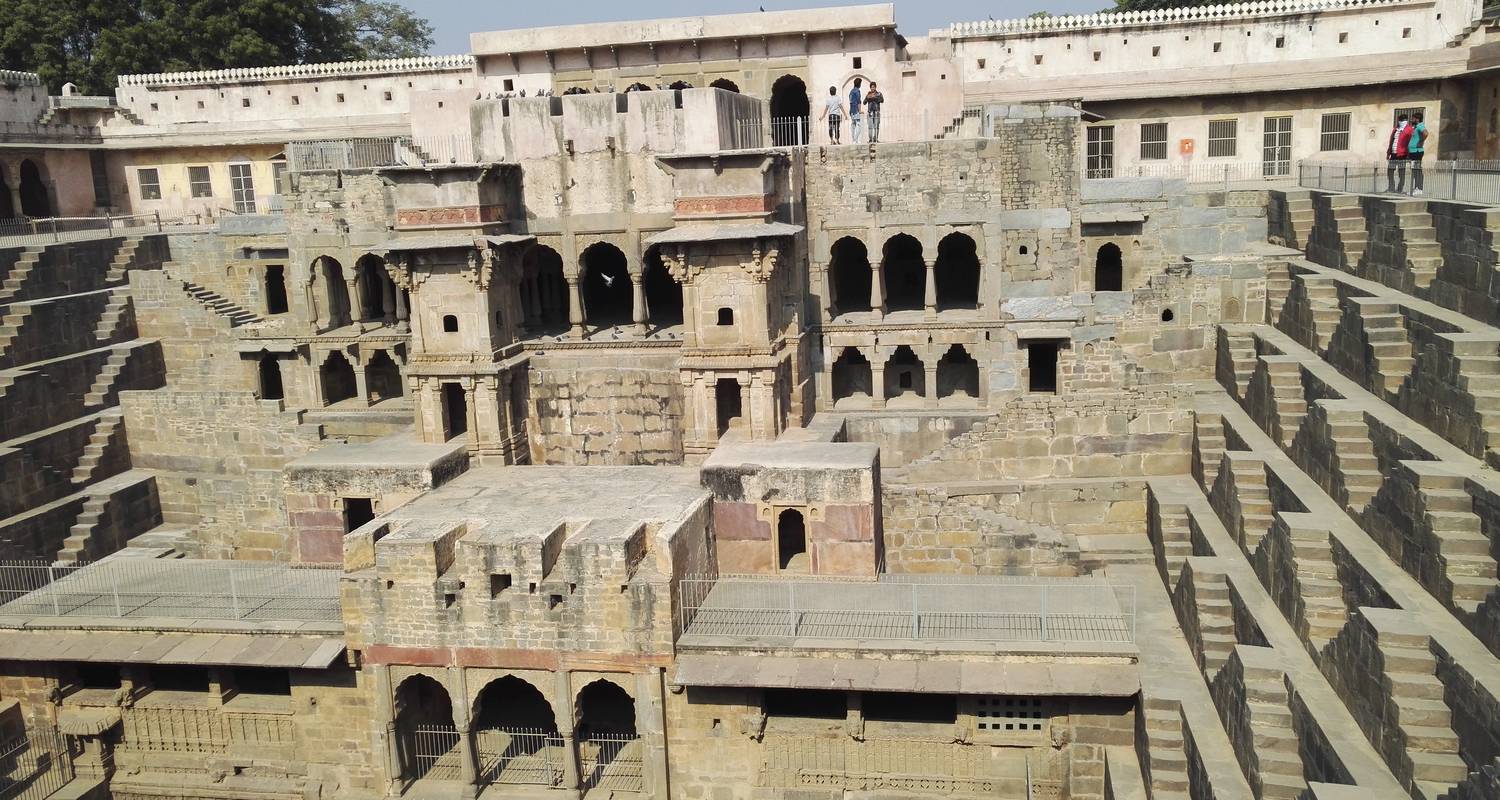
Chand Baori
Chand Baori is admired for its architectural brilliance and symmetry, and it remains a significant example of ancient Indian engineering and artistry.
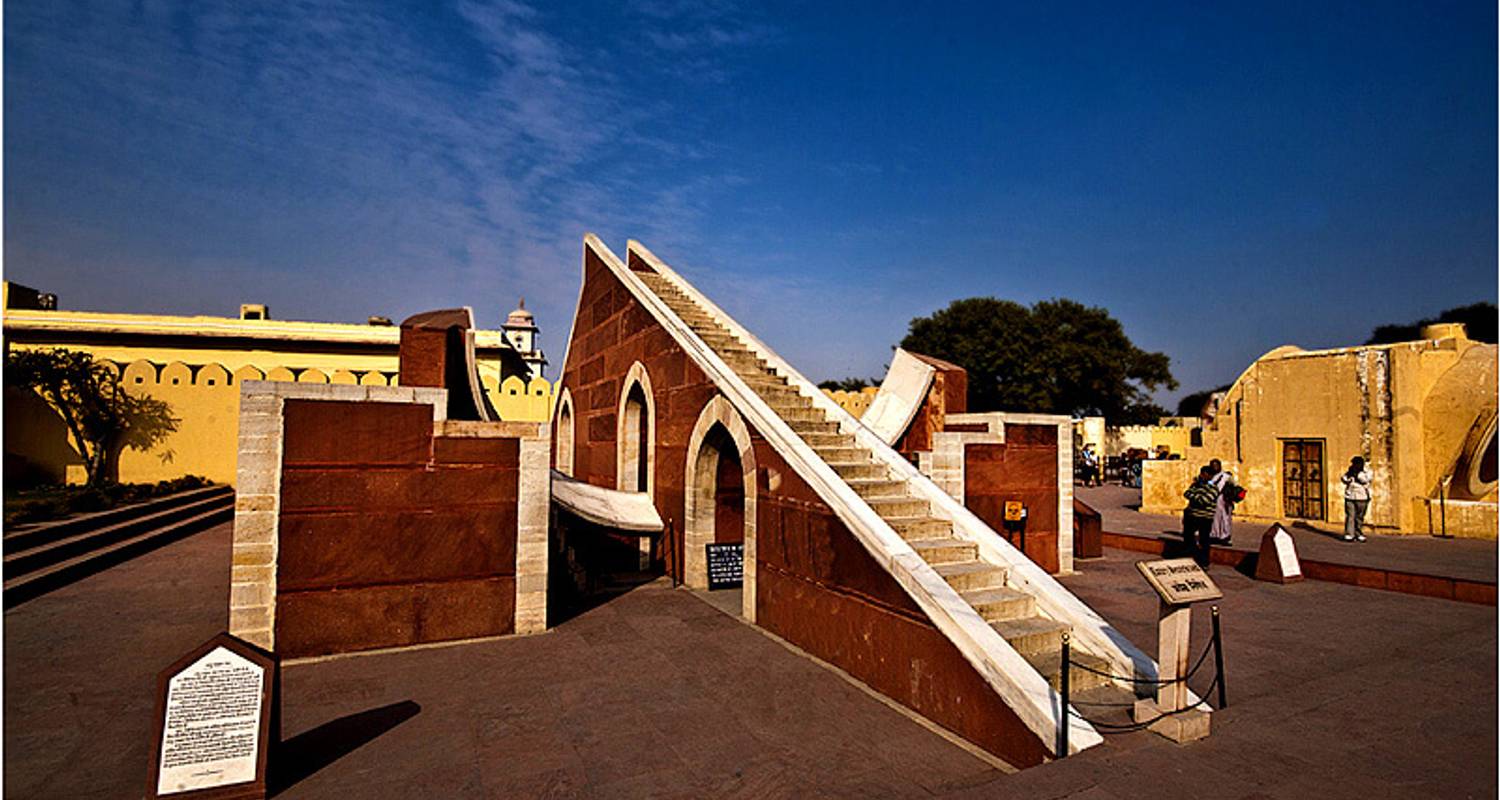
Jantar Mantar in Jaipur
Designed to observe celestial bodies with the naked eye, Jantar Mantar reflects the scientific and cultural advancements of its time. It combines elements of astronomy, architecture, and astrology, and was declared a UNESCO World Heritage Site in 2010. Today, it stands as a testament to India's rich scientific heritage.
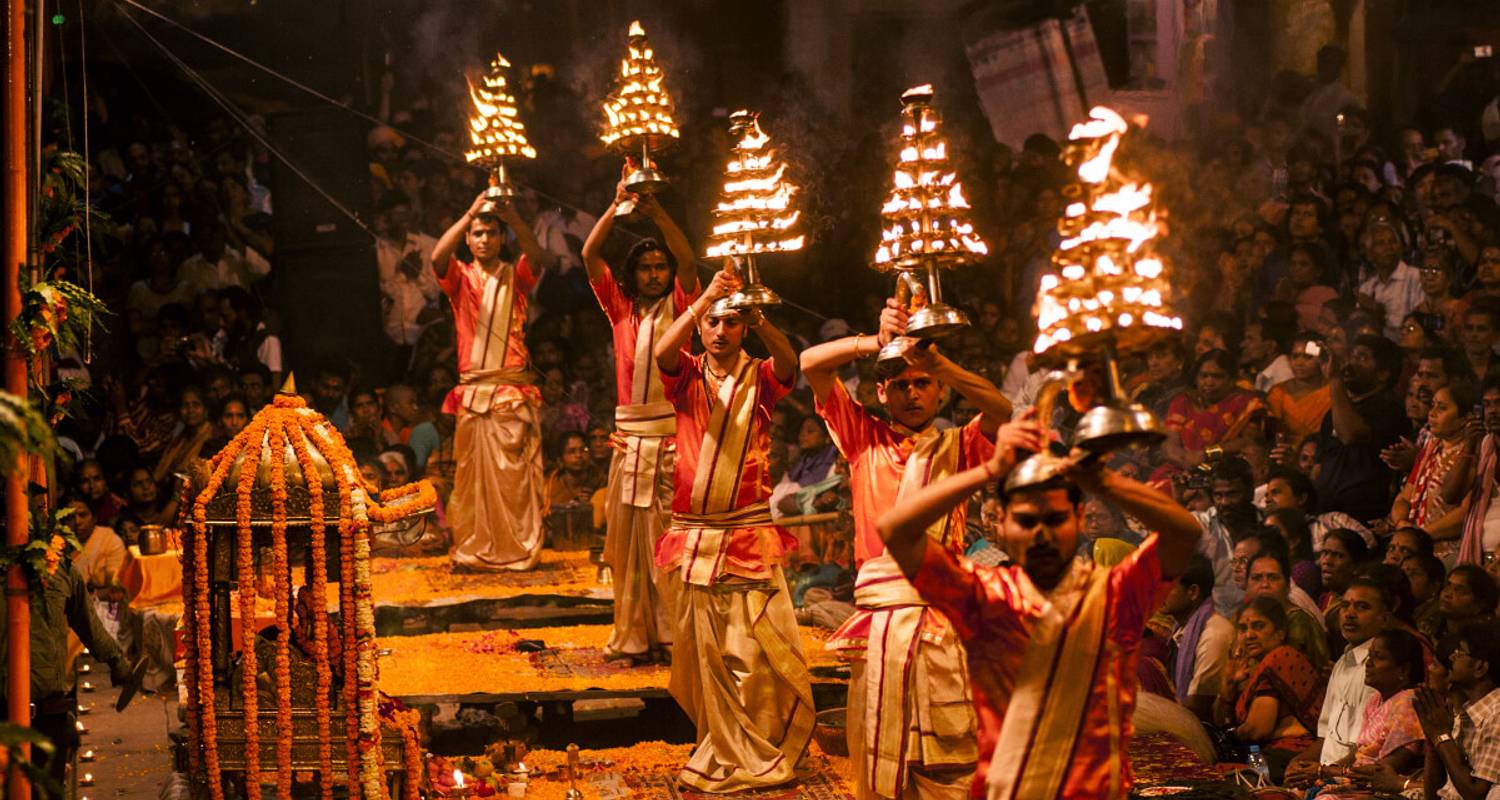
The Evening Ganga Aarti at Varanasi
The Evening Ganga Aarti at Varanasi is a captivating spiritual ritual held daily at Dashashwamedh Ghat along the banks of the River Ganges. Just after sunset, priests in traditional attire perform a synchronized ceremony with lamps, incense, conch shells, and chants, honoring the sacred river. The aarti creates a mesmerizing spectacle of fire, music, and devotion, attracting pilgrims and tourists alike, offering a deeply moving and unforgettable experience.
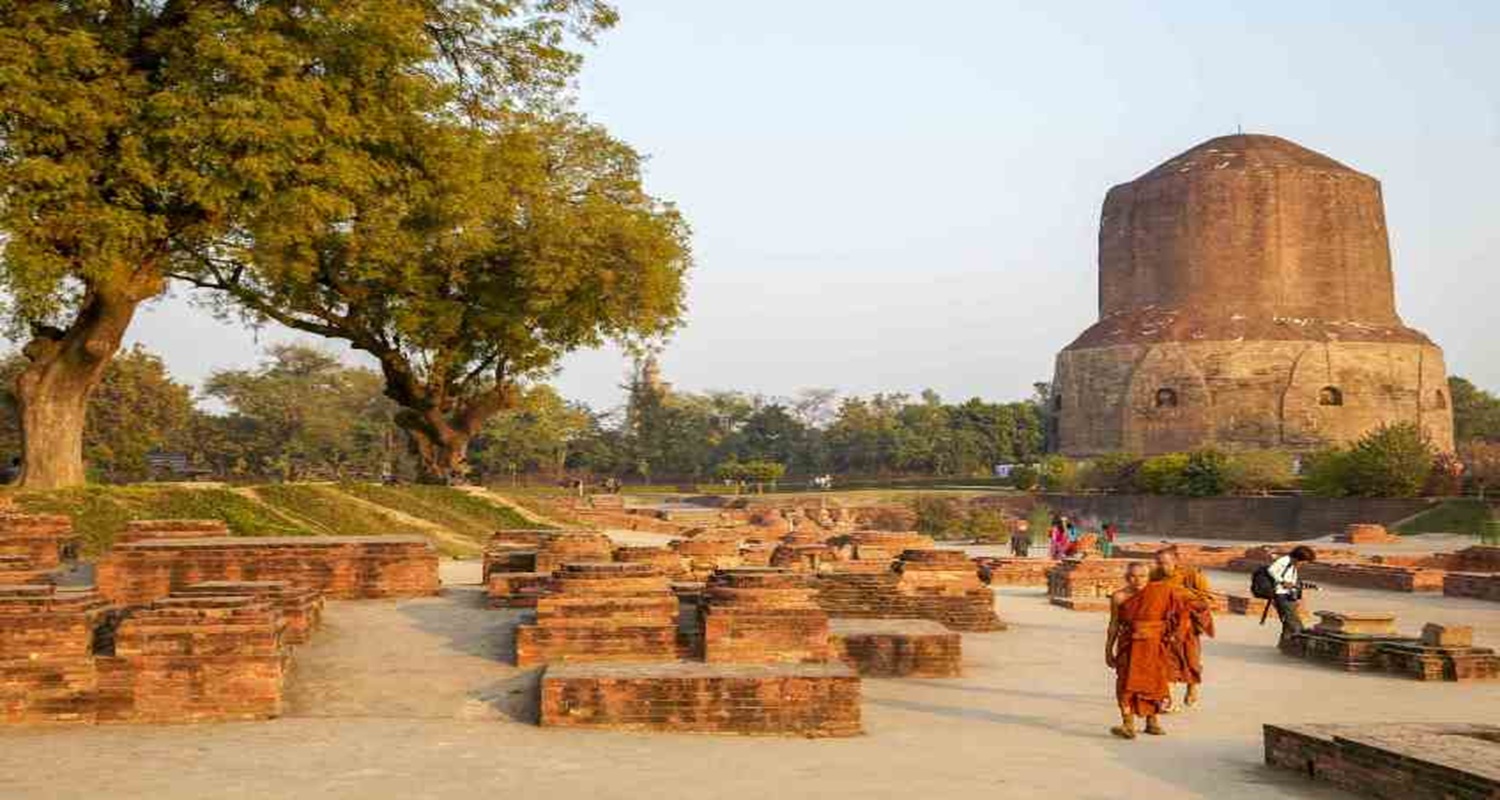
Sarnath
Sarnath is a significant historical and spiritual site located about 10 kilometers from Varanasi, in the Indian state of Uttar Pradesh. It is one of the four most important pilgrimage destinations for Buddhists, as it is the place where Gautama Buddha delivered his first sermon after attaining enlightenment—known as the Dharmachakra Pravartan (Turning of the Wheel of Dharma).
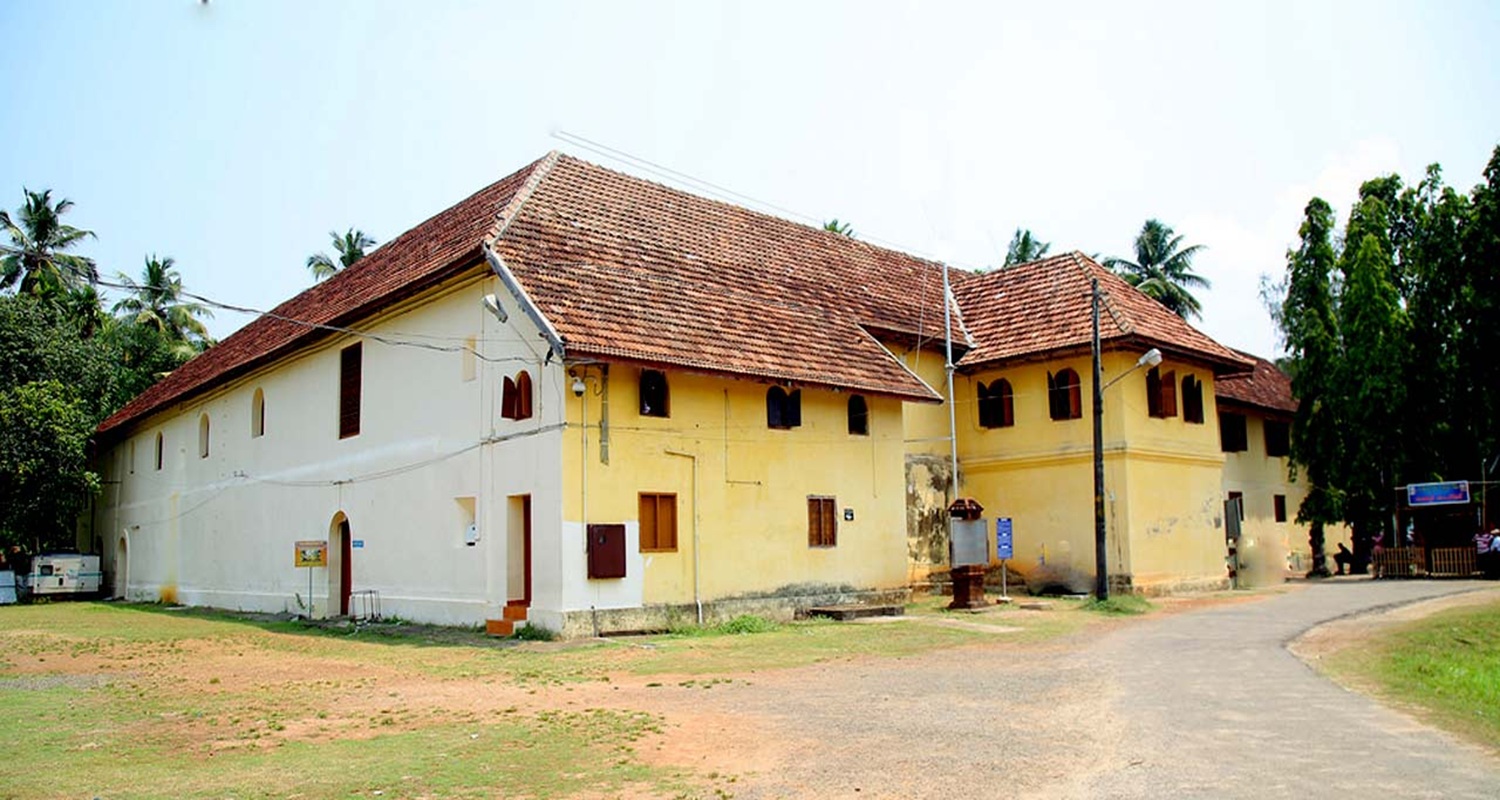
The Mattancherry Palace, Cochin
The Mattancherry Palace, also known as the Dutch Palace, is a historic landmark in Cochin, Kerala. Built by the Portuguese in 1555 and later renovated by the Dutch, the palace is renowned for its traditional Kerala-style architecture with sloping roofs, courtyards, and intricate woodwork. Inside, it houses exquisite murals depicting scenes from the Ramayana and Mahabharata, along with portraits of Kochi’s royal family. The palace offers a fascinating glimpse into Kerala’s royal heritage and cultural artistry.
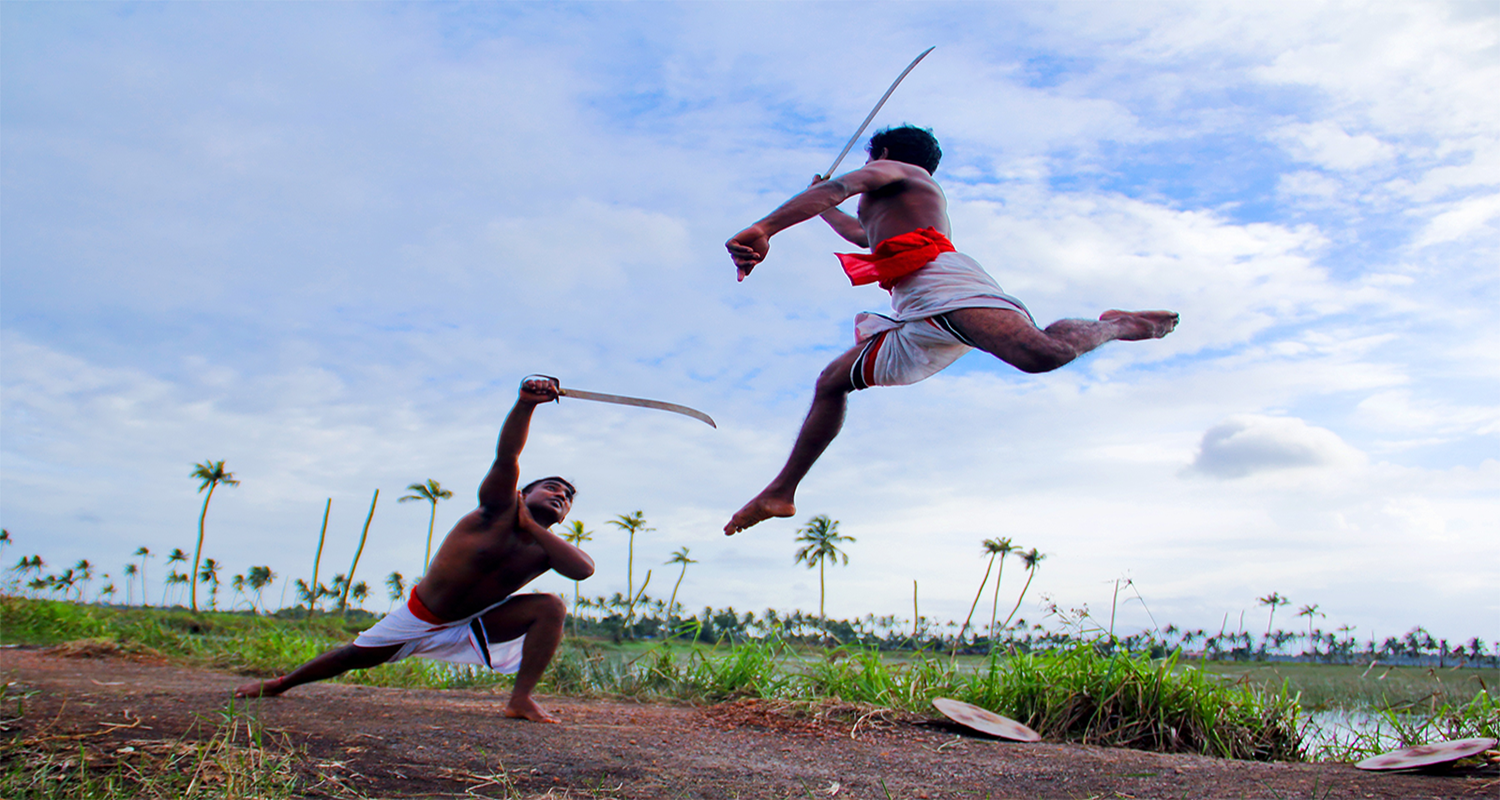
Kalaripayattu, one of the oldest martial art
Kalaripayattu, one of the oldest martial art forms in the world, originated in Kerala and is known for its graceful yet powerful movements. It combines strikes, kicks, weaponry, and healing techniques, drawing inspiration from nature and yoga. Often performed with rhythmic agility, it reflects Kerala’s rich cultural and spiritual heritage.
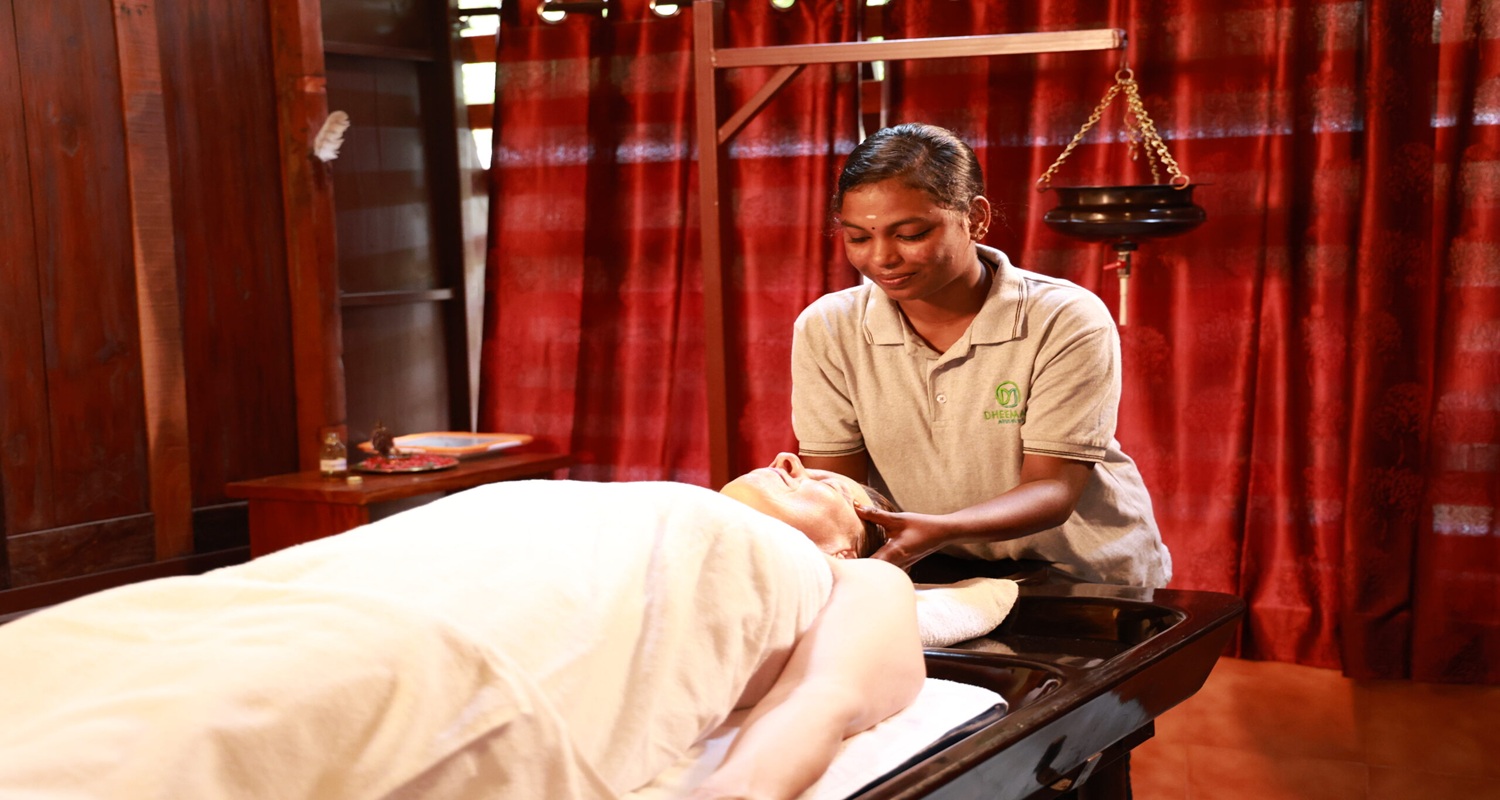
Ayurvedic programs, Kumarakom
Kumarakom offers a serene healing experience amidst Kerala’s backwaters. Known for its traditional therapies, rejuvenating massages, and herbal treatments, it focuses on restoring balance of body, mind, and soul. Many resorts and wellness centers in Kumarakom provide authentic Ayurvedic programs, often combined with yoga, meditation, and a tranquil natural setting, making it an ideal destination for holistic wellness and relaxation.
PASSPORT
A valid passport is required for at least six months before Boarding the Flight. We encourage you to check the validity of the passport and we advise you to bring a photocopy of your passport and the page of the visa obtained, or carry multiple copies of ETA, useful in case of loss.
INDIAN CONSULAR VISA
To enter India, an entry visa issued by the Indian Embassy is required. It is categorically necessary that all travellers, whose itinerary includes leaving and returning to the country, have obtained a double or multiple visas. During the flight to India you will be given a disembarkation form to be filled in with your data and to be delivered to passport control. The detachable part completed with the customs declaration will be returned to you, and must then be handed over to the customs upon leaving the airport.
INTERNAL FLIGHTS
Air tickets for flights within India or between India and Nepal, if not included in the intercontinental flight, will be collected by your companion or our representative and will be delivered to you upon arrival. Flights within India and between Nepal are the trickiest part of the journey. We recommend a lot of patience, because it is not uncommon for flights to suffer delays, cancellations or make intermediate stops not foreseen at the time of booking. It is therefore essential to always go to the airport on time (about 2 hours before the flight). In the event of cancellations, however, the companies, according to the new regulations, will refund the cost of the ticket but have no obligation to re-route. The rebooking will then be done by our local office by purchasing a new ticket. Purchasing it on the same day, the same fare as the canceled flight is not always available. In case this exceeds that of the cancelled flight, the difference must be paid directly on the spot. If there are no other flights on the scheduled route, a land transfer by car/bus will be provided in lieu of the ticket.
DOMESTIC FLIGHTS BAGGAGE ALLOWANCE
Since recently (August 2013) both on intercontinental flights and on internal flights, the companies are very strict in calculating the weight of the baggage and each additional kilogram is subjected to an extra payment according to the rules of the company itself. In this regard, we report the scheme concerning the baggage allowance for the economy class granted by each airline for flights within India and between India and Nepal:
Airline
Hand Baggage Weight
Checkin Luggage Weight
Air India
7 kg + Laptop
15 kg
Jet Airways
7 kg + Laptop
15 kg
Indigo & Spice Jet
7 kg + Laptop
15 kg
Go Air
7 kg + Laptop
15 kg
Jet Lite
7 kg + Laptop
15 kg
The company has the right to apply an extra cost for each kilogram exceeding the above, (indicatively from 4 to 8-euro per kg).
LOCAL GUIDES AND ESCORT TOURS
For the entire duration of the group tour, starting from your arrival in India, you will be assisted by a Tour Escort or local Guide (for individual tourists) in each city who will take care of every technical-organizational detail. The tour escort will also act as a local guide in the cities for which he is licensed. In the others he will be accompanied by a local foreign speaking guide or English-speaking guide as per the provisions of the Indian government. In the latter case, he will provide for the translation.
In many cities of India, in fact, there are no local guides speaking foreign languages (especially in southern India, central India and some parts of Rajasthan), or there are few.
THEFT
We remind you that passport, telephone and valuable accessories in general must always be kept by the passenger and never left unattended, as no service facility takes charge of any loss/theft during the tour. It is also good to have all the emergency bank numbers with you in case of need.
TIPS
In India, tipping is a custom rooted in local custom. The amount of tips is at the discretion of the passengers, but as a rule they are in the local custom. In restaurants it is customary to leave 10% of the bill as a tip.
A basic tip:
For half day drive with driver Rs. 300/ full day Rs. 500.
For porters Rs. 70 per bag
For Half Day Local Guide Rs. 500/ Full Day Rs. 800
Per Day Escorts Rs. 1000
(The amount is in total and refers to a group of 2/3 people, it can be increased if you are traveling in a group with more people)
For groups, even small in number but with tour escorts, it is advisable to give the guide a sum at the beginning of the tour (approximately 40/45 euros for 7/9 day tours) and he will distribute them appropriately, thus avoiding boring and continuous collections.
N.B. (This figure does not include a possible tip for the companion)
ROOM AVAILABILITY
The rooms are available until 12.00 on the day of departure. In India there is no day use system, therefore if the rooms want to be kept until departure they will have to be paid for the entire following night.
CHECK-IN ONLINE
We inform you that the check-in procedure can take place via online check-in, which can be implemented from the airlines' websites or via the automatic check-in devices specifically installed at the airport.
CLIMATE
The most pleasant season runs from mid-November to March, with moderate heat and low rainfall. The maximum temperatures vary from 27° to 30°, the minimums from 16° to 22°. In March the temperatures begin to rise with highs reaching 38°. The month of August records the peak of the monsoon season (from June to October) which invests the south-western regions with rainfall that varies in intensity according to the areas, limited in some to severe thunderstorms. In October and in the first half of November the south-eastern part of India is affected by a north-east monsoon.
CLOTHING
Clothing must take into account the period and the regions where you go. In southern India, light clothing can be worn all year round, without forgetting long trousers and long-sleeved shirts to protect against insects. During visits to the temples, excessively small clothing should be avoided. For those traveling to the northern regions, warmer clothing is needed, as the temperature can approach freezing in winter. In the desert region of Rajasthan the temperature varies a lot between day and night.
SHOPPING
In India the variety of handicraft production is practically infinite. Indian muslins, canvases, silks and brocades have enjoyed worldwide fame since ancient times and have been appreciated for the quality of the fabric, the beauty and resistance of the colors, the originality of the designs. Even today the brightly colored silk saris, embroidered or woven with gold or silver threads, the brocades of Varanasi as well as the cottons of Rajasthan, the wool or wool and silk carpets of Kashmir and Uttar Pradesh are renowned. The manufacture of fabrics is just one aspect of the varied and rich Indian craftsmanship which ranges from wood carving (teak, sandalwood, rosewood, ebony) spread almost everywhere, especially in Karnataka, to Agra marble inlays or the stone sculptures of Orissa, from ceramics to hand-painted lacquers, from brass and copper pottery to bamboo and leather objects. The skill of the Indians in the cutting and processing of semi-precious and precious stones has been known since ancient times. Haggling in the bazaars is common practice.
Do not buy souvenirs that cost animals their lives or harm nature.
FOOD AND DRINK
It is recommended to drink only bottled or boiled water (found in almost all restaurants and hotels). Carefully avoid tap water and ice in drinks. It is advisable to consume only well-cooked foods and packaged foods, avoiding raw vegetables and fruit that cannot be peeled.
MEDICAL ASSISTANCE
In India there is a great variety of doctors practicing the most diverse forms of therapy and the only hospital in Europe is located in Delhi. It is advisable to bring from Italy tablets against any gastrointestinal disorders and medicines that are difficult to find locally.
BEHAVIOUR
Before entering the temples, mosques and or gurdwaras it is essential to take off your shoes, generally it is allowed to keep your socks on. To avoid discomfort, do not bring leather articles of any kind with you, because they could arouse some opposition. Inside places of worship, tourists can move as they please and sometimes attend religious rites, for which it is preferable to wear modest clothes, avoiding tops, skirts and shorts. A small donation will be welcome.
The folded hands namaste is the typical Indian greeting and its use will be greatly appreciated. Especially in cities, men will gladly shake hands with tourists; in fact, this gesture is considered particularly cordial. The majority of Indian women, on the other hand, are reluctant to shake hands with a man, both Indian and foreign (a possible refusal should not be considered an offense) and are generally surprised by the informality of relations between the two sexes used in western countries. In private homes you will be welcomed as guests of honor and your lack of familiarity with local customs and traditions will be understood and accepted. If you should be tempted to eat with your fingers, remember to use onlyyour right hand.
GASTRONOMY
Indian cuisine varies according to the regions, with notable differences between the southern and northern regions, but has as a common feature the wise use of spices which are used not only to flavor foods but also to aid digestion. In the north it looks remarkably like that of Middle Eastern or Central Asian countries; there is great use of chili (hot pepper), the staple food is wheat, and various types of unleavened bread are consumed, such as pooris or chappatis. The meats are quite common, naturally not beef. In the south, where the Muslim influence has been less strong, vegetarian diets prevail, and the cuisine revolves around rice, consumed in an infinite variety of ways. The highly savory taste of Indian foods is related to the blend of spices frequently used in food preparation. These mixtures (kari) can accompany various vegetables, chicken or lamb meat, fish or rice. Rogan josh (lamb curry), gishtaba (spiced meatballs with yoghurt), korna (vegetable meat-based stews) are very common in the north. In the south, various vegetable dishes are widespread, including bhujia (a vegetable curry) and along the coasts, fish dishes, the Cochin prawns are delicious. Perhaps the most common dishes throughout India are, however, the simple dhal, essentially a lentil soup, and the thali, the typical vegetarian dish, usually served on a tray with small bowls full of vegetables accompanied by large -of quantity of rice. Among the desserts, kulfi, the typical pistachio ice cream, is very common, while tropical fruit is very abundant. It is a frequent habit to conclude the meal by chewing pal, a mixture of spices, betel nuts and other powders, all wrapped up in an edible leaf. Tea is the most popular drink and some varieties of Indian tea are famous all over the world. Try the rice beer.
LANGUAGE
In India a large number of local languages are spoken, very different from region to region, among which Hindi is the official one. English represents a strong instrument of national cohesion and is very widespread, especially in hotels or in places frequented by Westerners.
RELIGION
Religion forms an integral part of India's complex tradition. Four of the most important faiths in the world meet on this territory: Hinduism, Buddhism, Christianity and Islam and among these the first two were born in India. furthermore, this country which welcomed the Jews and the Parsees (followers of Zoroaster), who then integrated into Indian life, gave rise to Jainism, Sikhism and other innumerable cults and regional sects of lesser importance and which for centuries have acted and interacted with each other.
AIRPORT FEES
They usually already include exit taxes from the country. However, we recommend checking at the airport, as these are subject to change regulations.
PHONE
The cellular network is active in the country, however Italian cell phones are only active in the main cities and it is therefore advisable to purchase a card locally. To call from India the area code is 0039. To call India dial 0091.
VACCINATIONS
No mandatory vaccination is required for travelers from Italy. Before travelling, it is advisable to consult the competent ASL on the need to carry out vaccinations or appropriate prophylaxis. In general, subject to medical opinion, vaccinations against: diphtheria, hepatitis A and B, typhoid, tuberculosis, polio and tetanus booster are recommended. However, we recommend checking the Viaggiare Sicuri website at the link http://www.viaggiaresicuri.it/index.php?india
CURRENCY
The legal tender in India is the Indian Rupee. It is advisable to have currency in US dollars especially for entrances, Euros are also welcome. No Indian currency can be brought into the country or exported, while any amount of foreign currency can be imported. It is very complicated to exchange the Rupee in another currency, so it is advisable to buy in such quantities as to no longer have liquids in local currency at the time of departure. Credit cards, preferably from the VISA circuit, are accepted both in authorized shops and in hotels in large cities, where automated bank branches can also be used.
Our Staff
Our guides and professional escorts have experience in the area and in-depth cultural preparation. We can provide Guides in differenr languages also in most of the sectors but in some areas there shall be only english speaking Guides available, Such as Ladakh and the Himalayan areas, Kindly do check it with our travel experts regarding the availabiluty.
Means of transport
Our organization boasts a large fleet of new generation air-conditioned means of transport: from standard or deluxe cars (2/3 pax) to Overland vehicles (2/3 pax); from minibuses (4/8 pax) to grand tour buses (10/40 pax), with professional English speaking drivers, always attentive to the needs of travelers. The roads that connect the main cities of India are generally good. Indian Traffic conditions limit the transfer times to an average of 50 km per hour.
Hotels and tented camps
In Indian Subcontinent, the official category of hotels does not guarantee international standards and does not always correspond to the expectations of the traveler. The structures that MTA chooses, from luxury hotels, to Heritage Hotels (former residences of the Maharajas), to lower category hotels, are periodically supervised by our staff. In the Himalayan areas of Ladakh, hotels are provided among the best existing and standard tented camps with limited comfort, where a good spirit of adaptation is required.
Flights
The Major airports where International flights Land are Delhi, Mumbai, Chennai, Kolkata, Bangalore, Hyderabad, Almost all of the major International Airliens have theor scheduled flights from these cities. including Swiss, Emirates, Qatar Airways, Turkish Airlines, BrusselsAirlines and Etihad.
Personalized trips
Our Product Managers are available to travelers to develop personalized itineraries (for individuals or groups) and offer ad hoc programming, designed with maximum flexibility and with smallest details, for those who want to immerse themselves in the magic and spirituality of " Land of the Gods” outside the classic Itineraries or with programs already present in the catalog. MTA is also available to develop personalized travels in cinema, nature, sports, honeymoons, incentive travel, business tourism and medical tourism in India.
India Visa
To obtain an entry visa to India it is essential to have a passport valid for 6 months from the date of travel (with at least three consecutive free pages), and two passport photos. you can apply for ETA (Electronic Travel Authorization) The Link of the website is https://indianvisaonline.gov.in/evisa/tvoa Kindly check for permission Granted on ETA before boarding your flight.